
Leading the way to Discovery
Department of Developmental and Cell Biology (DCB)
Researchers in the Department of Developmental and Cell Biology investigate the fundamental processes that shape living systems, from the regulation of individual cells to the development, function and reproduction of complex organisms. Faculty research spans a broad range of areas and experimental systems, exploring questions with implications for human health including the origins of cancer, mechanisms of tissue repair, and the causes of developmental disorders. Through research and teaching, the department provides students with opportunities to engage with basic biological discoveries and their applications to disease, regenerative medicine, and the development of new therapies.
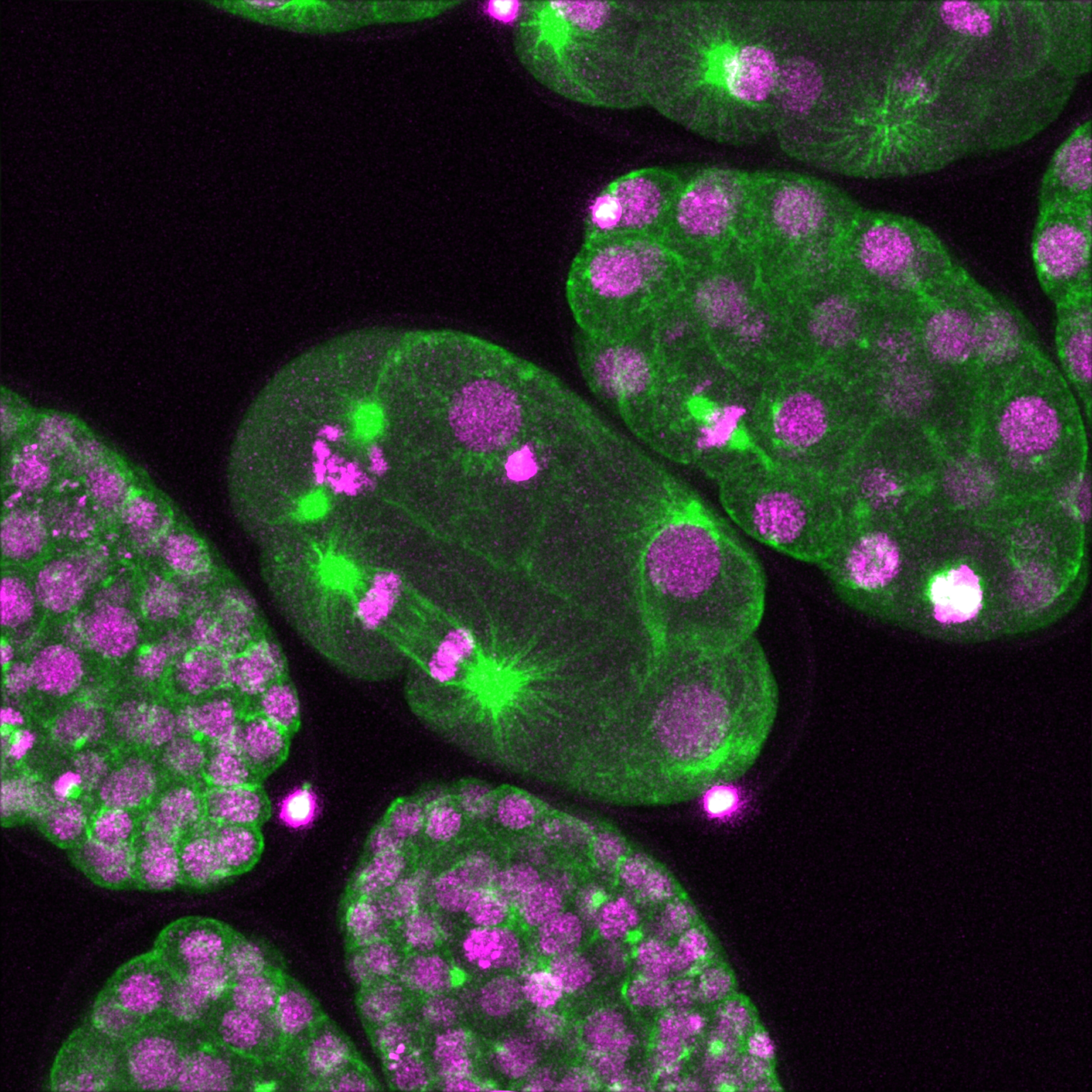
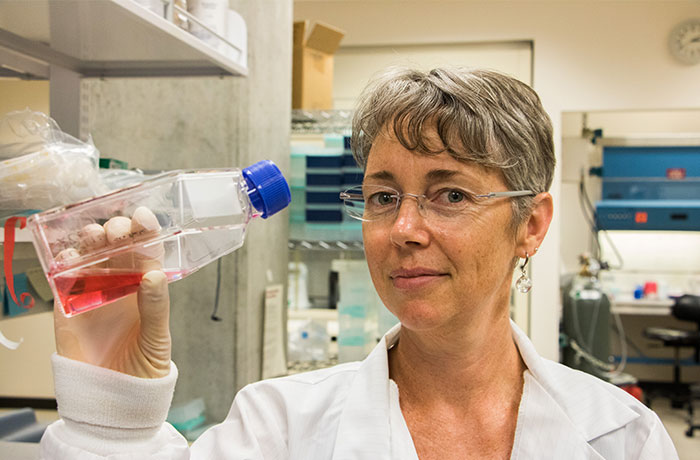
Faculty
A world class faculty dedicated to advancing knowledge about how cells function, communicate, grow, and develop into complex organisms.
Undergraduates
Exciting opportunities exist for Dunlop School majors interested in pursuing a degree in Developmental and Cell Biology or Genetics.
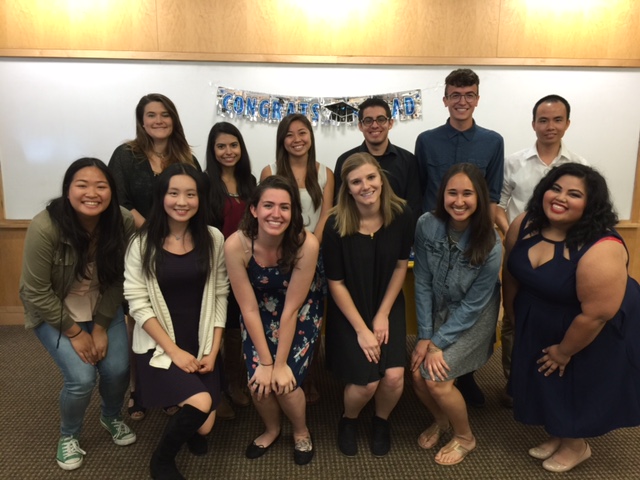
Graduates
Entering through 3 interdisciplinary doctorate programs, Developmental and Cell Biology graduates will be prepared to investigate compelling biological questions.
News
David Bojorquez Earns Two Awards to Explore How Life Takes Shape
Before an embryo has organs or recognizable features, its cells are already carrying out an extraordinary balancing act: multiplying while taking on different jobs. UC Irvine graduate student David Bojorquez is investigating how those processes work together. Now, two awards will support his efforts to understand how life takes shape. Bojorquez, a member of the…
Dunlop School Celebrates Faculty Excellence in Teaching and Mentorship
Helping students understand science, build confidence and envision their futures takes dedicated educators. The Charlie Dunlop School of Biological Sciences is celebrating two such faculty members, Katherine Thompson-Peer and Andrea Nicholas, who were recognized at UC Irvine’s 34th annual Celebration of Teaching on Sept. 17, 2026. Thompson-Peer, an assistant professor of developmental and cell biology,…
Small fish, big possibilities: UCI BioEYES brings science to Santa Ana classrooms
A child’s opportunity to explore science should not depend on access to a university laboratory. Yet bringing hands-on research into middle school classrooms requires equipment, expertise and sustained support. As science shapes everyday decisions about health and the environment, giving young people opportunities to investigate, question and understand evidence matters. Since 2022, UCI BioEYES has…
UC Irvine Study Reveals How Damaged Tissue Can Limit Nerve Cell Repair
Dual-imaging of class IV ddaC sensory neurons (green) and epidermis (magenta) in live, third instar Drosophila larvae. Credit: Imaged by Mia A Brantley Irvine, Calif., September 30, 2026 — When a traumatic injury damages the nervous system, understanding what prevents nerve cells from repairing themselves is critical to improving recovery. Yet many laboratory studies examine…
Deep Learning Designs DNA Switches That Turn Genes On In Mouse Embryos
A transgenic mouse embryo in which AI-designed regulatory DNA sequences drive gene expression in the forebrain (red) and in the midbrain (green). Image credit: Ethan Hollingsworth Irvine, Calif., August 25, 2026 — One of biology’s enduring challenges is explaining how cells carrying the same genetic instructions develop into such different organs like the heart, brain…
Irvine is leading the way for innovators
When biologist Maksim Plikus took the leap into the multibillion-dollar market for hair-loss treatments, he had lots of local support.
Dr. Ken Cho has an AAAS Fellow award and a Pew Scholar in Biomedical Sciences.
Dr. Michael Parson’s lab created a method to ablate cells at will to study regeneration. This method has been used in over 2,300 publications to date.
Dr. Kavita Arora was a recipient of the Searle Scholar Award.
Dr. Scott Atwood discovered how basal cell carcinoma gains resistance to targeted therapy.
Faculty Spotlight
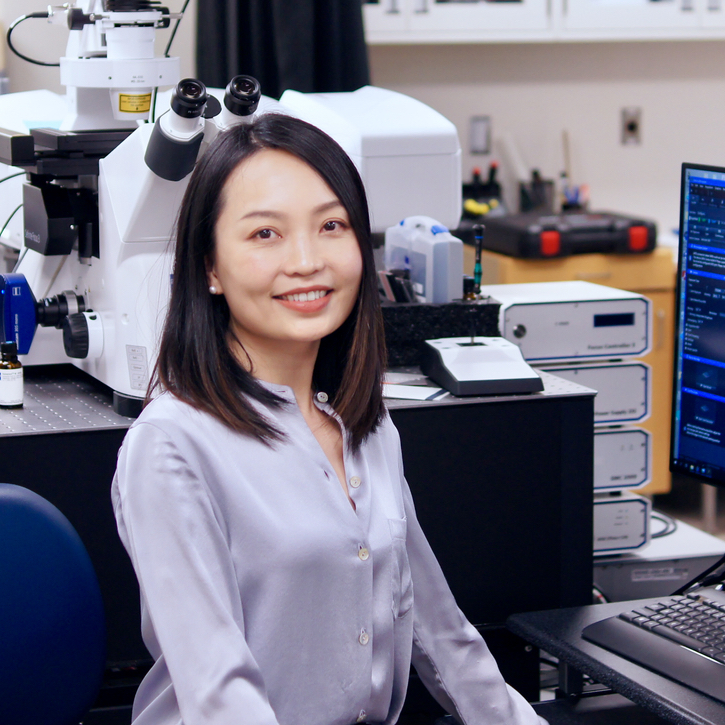
Xiaoyu Shi, Ph.D.,
Professor
Making the Invisible Visible: Mapping Cells at the Nanoscale in Health and Disease – We develop super-resolution microscopy and spatial multiomics to reveal the organization of proteins, lipids, RNA, and DNA within cells and tissues. Combining expansion microscopy with spatial proteomics, we map changes in biomolecular identity, abundance, and distribution during aging, Alzheimer’s disease and cancer. Our goal is to uncover disease mechanisms and identify biomarkers that enable earlier diagnosis and guide precision treatments.